general
Free Australian Education Agent Consultations: A 2026 Guide for Singapore Students and Newcomers
Learn how Singapore students and newcomers can make the most of a free consultation with Australian education agents. Covering visa pathways, GCE A-Level and polytechnic entry, top universities, costs, and key questions to ask before you apply for 2026 intake.
Around 3 in 10 Singaporeans who pursue a degree overseas end up choosing Australia. The country is close, culturally familiar, and home to several universities that rank comfortably inside the global top 100. For many families, the first practical step is a free consultation with an Australian education agent — a session that costs nothing but can shape the entire application timeline, visa strategy, and budget plan.
A free consultation Australian education agents offer is not a sales pitch disguised as advice. It is a regulated first meeting where a registered counsellor maps your academic background to real course options, explains visa subclasses such as the subclass 500 student visa, and highlights costs that a brochure will never show. This guide explains what actually happens in those sessions, which questions get the most useful answers, and how Singapore residents and newcomers can use a free consultation with an Australian education agent to move from curiosity to a confirmed enrolment for the 2026 intake.
Why a Free Consultation with an Australian Education Agent Matters for Singapore Residents
Singapore’s education pipeline runs on a few clearly defined tracks: GCE O-Level to junior college to GCE A-Level; polytechnic diploma; IB diploma; or private qualifications. Australian universities recognise all of them, but the entry requirements vary course by course. A student with a 3.2 polytechnic GPA in mechanical engineering may qualify for direct second-year entry at some Group of Eight universities but only first-year entry at others. The same A-Level score of BCC can open the door to a Bachelor of Commerce at one institution while falling short at another.
A free consultation with an Australian education agent turns these scattered data points into a personal pathway. The agent typically pulls up the latest admissions tables while you sit there, checking prerequisites for the courses you name. They will flag whether your English language test scores (IELTS, TOEFL, or PTE Academic) meet the threshold or whether a packaged English course makes more sense. For permanent residents and new citizens now living in Singapore, agents also clarify how previous qualifications earned outside Singapore and Australia are assessed.
Beyond entry requirements, the session often surfaces cost-of-living estimates that official websites average too broadly. An agent might point out that a shared apartment in Adelaide costs roughly half the rent of a similar setup in Sydney, or that certain regional campuses make students eligible for an extra year on the post-study 485 visa. These details rarely appear on a university homepage.
What Happens During a Free Consultation Australian Education Agent Session
Most free consultation Australian education agent meetings run 45 to 60 minutes. They can happen in person at the agent’s Singapore office, over a video call, or occasionally at education fairs. The structure is fairly standard.
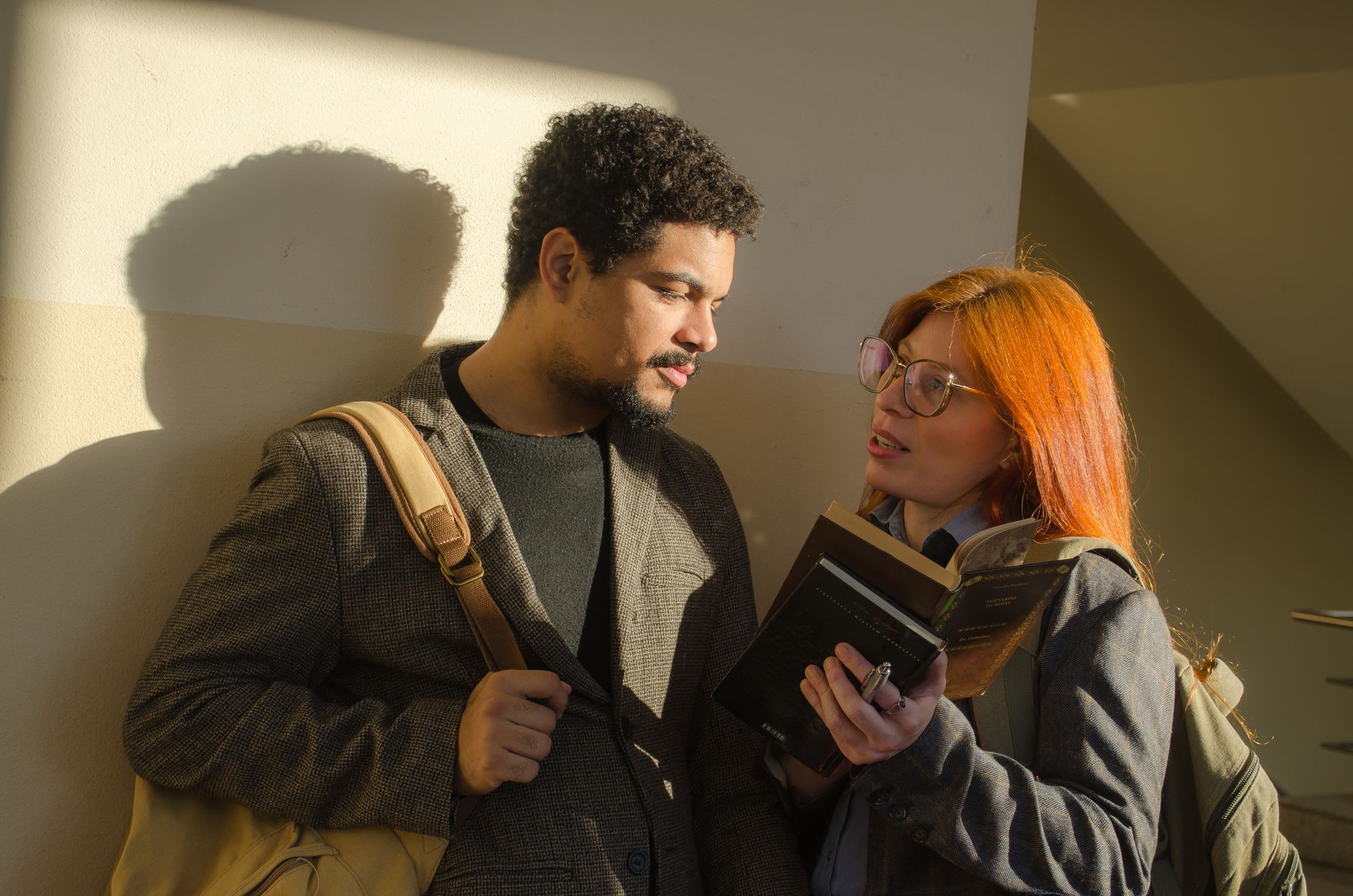
Academic background review. The agent asks for scanned or physical copies of your certificates and transcripts. For Singapore students, this means O-Level results, A-Level grades, polytechnic transcripts and diploma, IB points, or private qualification certificates. If you are a newcomer without local qualifications, the agent will compare your credentials against Australian Qualification Framework levels.
Course and university shortlisting. This is the core of the free consultation. Agents access databases that filter courses by discipline, location, tuition fee range, and intake month. A student interested in cybersecurity might see options at RMIT, UTS, and Edith Cowan University, each with different specialisations and industry placement structures. The agent explains which courses have professional accreditation — a critical detail for accounting, engineering, and nursing degrees.
Visa pathway preview. While education agents cannot provide immigration legal advice unless they hold a MARN (Migration Agents Registration Number), they can outline the standard student visa (subclass 500) requirements, Genuine Temporary Entrant (GTE) expectations, financial capacity evidence, and Overseas Student Health Cover (OSHC) obligations. They will also mention post-study work rights under the subclass 485 visa, which is a significant factor for many Singapore families weighing the long-term return on investment.
Cost breakdown. The best sessions end with a transparent spreadsheet. It lists tuition fees per semester, estimated annual living costs, OSHC premiums, visa application charges, and any administrative fees the agent’s own service may involve. Because the initial session is free, there is no obligation to proceed with that agent.
How to Spot a Reliable Australian Education Agent Offering Free Consultations
Not every agency that advertises a free consultation with an Australian education agent is worth your time. Singapore’s education agency landscape includes both large firms with decades of experience and smaller outfits that only push a handful of partner universities. Here is how to filter them.
Check registration and affiliations. Reputable agents are usually listed on the Australian government’s agent code of ethics or accredited by professional bodies such as QEAC (Qualified Education Agent Counsellor) or ICEF. Many display these credentials on their website. Ask directly during the free consultation Australian education agent session: “Can you show me your counsellor accreditation?”
Look at the range of institutions they represent. A good agent works with universities across tiers — Group of Eight, Australian Technology Network, regional universities, and private higher education providers. If an agent only promotes two or three institutions, their advice is filtered through a commission structure.
Transparency about service fees. The consultation itself is free. Some agents charge a separate service fee for document processing or statement of purpose guidance; others are fully funded by university commissions and charge the student nothing at all. A trustworthy agent explains this distinction before you hand over any documents. Brands like 51offer, AUSTAR, and Shunshun Study Abroad, for instance, operate on a university-commission model and clearly state when a service is provided at no cost to the student.
Review their post-enrolment support. A strong signal is whether the agent helps with accommodation booking, airport pickup, and bank account setup after you accept an offer. These after-sales services indicate the agency aims for a long-term reputation, not a one-time placement.
8 Questions Singapore Students Should Ask in a Free Australian Education Agent Consultation
Walking into a free consultation Australian education agent session with a prepared set of questions changes the dynamic. Instead of passively receiving a sales presentation, you interview the agent. These eight questions regularly uncover information that determines whether a study plan is viable.

- “Based on my exact qualifications, which intake can I realistically target — February 2026 or July 2026?” Many students miss application deadlines because agents initially speak in general terms. Pin the timeline down to a specific month.
- “Of the courses you recommend, which ones are accredited by their relevant professional bodies?” This matters for accounting (CPA Australia, CA ANZ), engineering (Engineers Australia), IT (Australian Computer Society), and health sciences (AHPRA).
- “Can you show me the total cost including OSHC, visa fees, and agent service fees, not just tuition?” Ask for it in Singapore dollars so your family can compare directly against local university expenses.
- “What have Singapore students with my qualification profile achieved in the past two years?” A data-backed answer — “three students from a similar polytechnic GPA got into UQ’s Bachelor of Engineering last year” — is far more convincing than “you should be fine.”
- “Which campus location gives me a longer post-study work visa, and how does the regional classification affect my options?” This links directly to the subclass 485 visa changes and can affect where you apply.
- “Do I need to sit an English test, or does my GCE O-Level / A-Level English grade meet the requirement?” Many Singaporeans are surprised to learn that some universities waive IELTS if you scored a C6 or better at O-Level English, but the waiver is not universal.
- “If I want to switch courses or universities after the first semester, what are the implications for my student visa?” This reveals how well the agent understands compliance, not just admissions.
- “What happens after I accept the offer — who handles the visa lodgement and what documents do you need from me?” Clarify whether the agent submits the visa on your behalf or only advises, and whether that service is included in the free consultation follow-up or billed separately.
Free Agent Consultation vs Self-Application: A Practical Comparison for Singapore Residents
Some Singapore families wonder whether a free consultation with an Australian education agent is necessary at all. After all, university websites are public, and the Australian Department of Home Affairs posts visa checklists online. The table below compares both paths for Singapore-based applicants.
| Aspect | Free agent consultation route | Self-application route |
|---|---|---|
| University shortlisting | Agent cross-references multiple universities in one session; knows hidden prerequisites. | You manually compare course pages; risk missing pre-requisite changes. |
| Application fees | Many agents waive or reimburse application fees through partnerships. | You pay each university’s application fee (AUD 50–150). |
| GTE statement | Agent provides a template and reviews drafts based on hundreds of previous cases. | You research forum posts and hope you meet the standard. |
| Visa lodgement | Some agents lodge as part of the free service; others guide you step by step. | You complete everything yourself via ImmiAccount. |
| Time investment | 45–60 minutes upfront, plus email follow-ups. | Several hours spread across weeks. |
| Cost | Usually zero if the agent works on university commission. | AUD 710 visa fee + university app fees + OSHC (paid either way). |
For most Singapore students, the main advantage of a free consultation with an Australian education agent is not just the time saved but the reduction in small, expensive mistakes — applying to a course that will not lead to professional accreditation, missing a GTE nuance, or picking a campus in a non-regional area when two hours away a regional campus would give an extra year of work rights.
From Free Consultation to Enrolment: A Step-by-Step Timeline for 2026 Intake
Month 1: Attend the free consultation. Bring all qualification documents — O-Level, A-Level, polytechnic transcripts, IB results, and any English test score reports. By the end of the session, you should have a shortlist of three to five courses and their entry requirements.

Month 2–3: Prepare and submit applications. The agent will ask you to fill in application forms and draft a statement of purpose or GTE statement. If the agent does not charge a service fee, they typically submit applications to multiple universities at no cost to you. Conditional offers usually arrive within two to six weeks.
Month 4: Accept an offer and pay the deposit. Compare the unconditional or conditional offers. The agent explains the deposit amount, payment methods, and refund policies. Many Singapore families use the deposit deadline as a forcing function to finalise their choice.
Month 5–6: Visa application and health checks. The agent will prepare your student visa documents — Confirmation of Enrolment (CoE), OSHC certificate, financial proofs, and GTE statement — and either lodge the visa for you or guide you through the ImmiAccount process. You will need to complete a medical examination at an approved panel clinic in Singapore.
Month 7–8: Pre-departure preparation. This includes booking flights, arranging accommodation (on-campus, homestay, or private rental), setting up a bank account, and attending pre-departure briefings that some agents organise.
Throughout this timeline, the original free consultation Australian education agent session remains the foundation. Everything that follows — application strategy, visa documentation, pre-departure advice — flows from the course list and pathway options discussed in that first zero-cost meeting.
FAQ
Is a free consultation with an Australian education agent really free, or are there hidden charges?
Genuine free consultations are free. Agents who hold university representation agreements earn a commission from the institution when a student enrols, which means they do not need to charge the student for the first session. Before the meeting, ask the agent to confirm in writing that no fee will be charged for the consultation itself. If the agency also offers paid services — such as visa lodgement, document translation, or SOP rewriting — they must disclose this separately. Reputable agencies like 51offer and AUSTAR clearly distinguish between free counselling and optional paid services.
Can Singapore polytechnic diploma holders get direct entry to the second year of an Australian degree through an agent?
Yes, many Australian universities grant advanced standing or credit transfer for a relevant polytechnic diploma. During a free consultation Australian education agent session, the counsellor will check the university’s credit transfer database for your specific diploma course and GPA. In some cases, you can enter directly into the second year of a three-year bachelor’s programme. This depends on the match between your polytechnic modules and the university’s first-year curriculum.
Do I need to take IELTS if my medium of instruction in Singapore was English?
It depends on the university. Several Australian institutions waive English language proficiency requirements for applicants who achieved a minimum grade (often C6 or better) in GCE O-Level English or a certain score in A-Level General Paper. However, some competitive programmes still require IELTS or PTE Academic. During the free consultation, the agent can check the specific English waiver policy for each university on your shortlist.
How early should I attend a free consultation if I am targeting the February 2026 intake?
Ideally, start the process by March or April 2025. This gives you time to research, attend multiple free consultations if desired, gather all documents, and meet application deadlines. Most Australian universities open their February 2026 intake applications between August and November 2025.
Summary
A free consultation with an Australian education agent is a practical first step for any Singapore resident or newcomer considering university education across the strait. The session costs nothing, yet it gives you a personalised shortlist of courses, a clear timeline for the 2026 intake, and a preview of visa and financial requirements. By going in with the right questions — about accreditation, campus location, and hidden costs — you can quickly tell whether an agent is genuinely useful or simply pushing a narrow set of options. Singapore’s academic credentials translate well into the Australian system, and with a well-prepared free consultation, the path from O-Level results or a polytechnic diploma to an Australian university campus becomes far less intimidating.